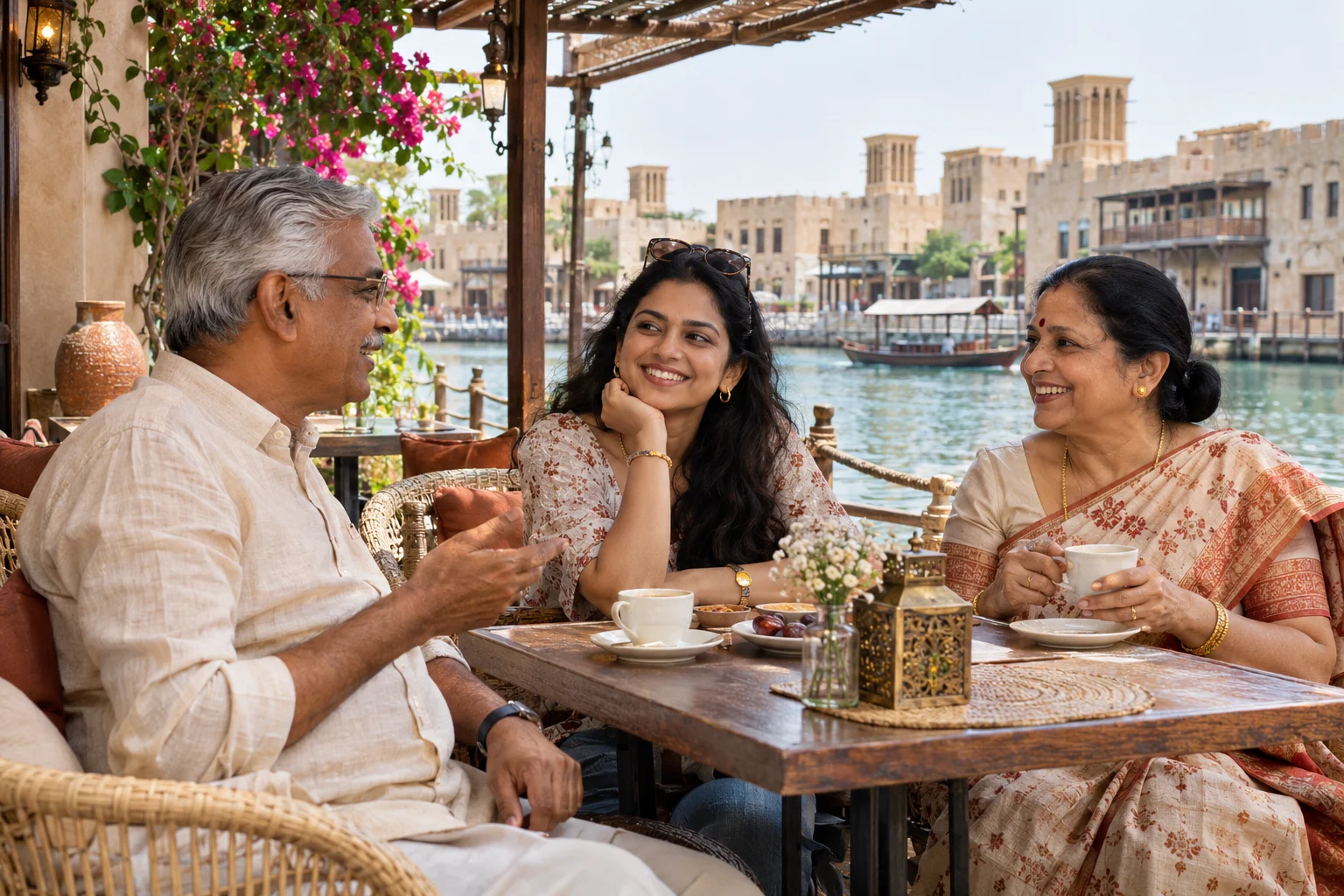
Illustrative image created for this guide; it does not show a guaranteed venue feature, booked activity or actual customer.
Plan Dubai around comfort and shared interests
Exploring Dubai with grandparents works best when you choose places the family can enjoy at a comfortable pace. Start with one main area, a clear arrival point and a proper seated break. Add another stop only when the practical route and everyone's energy allow it. A shorter day can still include a meaningful view, a meal and time together.
Age alone does not tell you what a person wants from a holiday. Some grandparents enjoy long walks and active visits; others prefer a gentle route with fewer transfers. Ask them directly about interests and practical needs. Plan with them rather than assuming that every older traveller needs the same attraction or the same amount of support.
This guide offers ways to choose and organise visits. It does not certify a route as accessible or give personal health advice. Ask each venue about the specific access arrangements your group needs and consult an appropriate professional for personal fitness questions. Current surfaces, entrances and services matter more than a broad label in a travel article.
Use our Dubai neighbourhood days guide for the wider trip. Its central idea is useful for a multigeneration holiday: give each area enough time and avoid repeated journeys across the city. A calm structure leaves room for conversation as well as sightseeing.
Begin with a family conversation
Ask what they actually want to see
Give grandparents a chance to name their own priorities. They may want a modern view, a heritage area, a particular meal or time beside the water. Do not reduce their choices to whatever the youngest travellers prefer. A shared holiday works better when each generation has a reason to look forward to the day.
Keep the questions specific. Would they prefer a short museum visit or a waterside meal? Would they enjoy a high viewpoint or rather see buildings from ground level? Two clear options can be easier to compare than a long list of attractions. Use the answers to choose the main experience before buying tickets.
Discuss the practical route without embarrassment
Ask about walking distance, steps, vehicle entry, standing in queues and the need for breaks. These are ordinary planning questions. Explain that the purpose is to choose the right route, not to decide what someone should be able to manage. A traveller may be happy with one type of movement and less comfortable with another.
Share the practical needs with the venue and transport provider before booking. Ask for specific information rather than a simple yes to whether the place is suitable. A destination may include several different routes. You need the one that matches the visit you intend to make, not a general description of the whole site.
Agree on a shorter version
Choose the main visit and one optional addition. Make it clear that leaving the extra out is part of the plan. Nobody should feel responsible for disappointing the family if they prefer to stop. A shorter version protects the main experience by keeping the day from depending on everyone having unlimited energy.
Tell the children that the family will take breaks together. That helps the pace feel shared rather than imposed by one person. Give younger travellers a small role, such as choosing a photograph or asking a grandparent what they noticed. A family outing can be about exchanging perspectives, not only seeing attractions.
Consider a focused heritage visit
Choose a small part of Old Dubai
Old Dubai can provide stories, architecture and a contrast with modern districts. Choose a limited area and check the actual route. A heritage neighbourhood may involve outdoor walking and different surfaces, so do not assume every section suits every visitor. Ask about the specific entrance and connection that matter to your group.
Our Old Dubai walking route offers a wider plan to adapt. Select one part rather than copying the entire route. A short look at buildings followed by a seated meal can be enough. You do not have to add several markets or a water crossing to make the visit feel complete.
Use stories to connect generations
Ask grandparents what details remind them of places or experiences from their own lives. Keep the conversation open rather than expecting a particular answer. A doorway, boat or shopfront may start a story that children would not hear during a rushed route. Allow time for that without feeling the group is falling behind.
Respect the setting and the people using it. Ask before taking close photographs of others and keep paths clear. If shopping is part of the visit, agree a budget and keep the browsing period manageable. A traveller who does not enjoy shopping should still have a comfortable reason to be there.
Consider Al Seef as a limited waterfront outing
A Creek-side visit can focus on a short walk and a meal rather than a full heritage day. Our Al Seef first-visit guide helps you understand the wider idea. Check the actual arrival point, seating options and current route before deciding how much ground to cover.
Do not assume that a place with cafés has a seat available exactly when you need one. If a particular meal or table matters, check reservation arrangements. Keep a backup that does not require a long walk. A dependable break can be more important to the outing than adding another named sight.
Keep a water crossing optional
A boat crossing has boarding, seating and operating arrangements of its own. Ask the responsible operator about the practical details needed by your group. Do not assume a crossing is suitable simply because it is short or commonly recommended. The family can enjoy a Creek-side visit from land if that fits better.
If you choose a service, confirm the route, boarding location and return plan. Allow time for waiting and the connections at both ends. A general photograph of an abra does not describe your exact journey. Keep the wider itinerary flexible so nobody has to hurry after the crossing.
Consider a modern viewpoint with the right arrangements
Some grandparents may enjoy seeing the scale of Dubai from a high viewpoint. Compare the actual experience, not only the height or fame of the building. Entry processes, walking, queues, seating and the route back can affect comfort. Ask the provider about what matters to your family before selecting the ticket.
Our Dubai Frame, Burj Khalifa and The View comparison helps you ask the right questions. Treat each product as a separate booking with its own conditions. A photograph of a view is not a promise that your visit will include a particular seat, service or route.
Make the viewpoint the day's main event
If the experience matters to the group, give it enough time. Do not place it after a long morning walk and before another fixed booking. Allow a calm arrival and a flexible meal afterward. One well-chosen paid attraction can carry the day without needing several other tickets around it.
Ask each traveller whether the experience interests them. A famous viewpoint may not appeal to someone who dislikes heights or prefers ground-level sightseeing. Offer a different main plan rather than trying to persuade them that every visitor has to do it. The holiday belongs to the people taking it.
Consider a short modern waterfront route
Dubai Marina and JBR can offer modern buildings, waterside views and meal choices. Choose one small section with a clear start and finish. The whole area does not need to become a single walking goal. Confirm the route and practical arrival arrangements before assuming the promenade is an easy outing for everyone.
Use our Marina and JBR evening walk guide as a menu of ideas. Shorten it to match the group. If a meal is the main reason for going, plan around that location and make the walk optional. A comfortable seated view can be as valuable as covering a longer route.
Do not confuse a waterfront meal with a cruise
A cruise is a separate product with boarding steps, reporting times and conditions. Ask about access, seating and the actual departure point before booking. Do not assume that a boat visible near the restaurant is the boat you would join. Different providers may use different locations within a broad district.
If the family chooses a land-based outing, treat that as a complete plan. There is no need to add a boat experience to justify visiting the water. Keep the return journey easy to understand, especially after an evening meal when some travellers may prefer to head straight back.
Consider an indoor visit carefully
Indoor does not always mean short or quiet
A mall or attraction can involve long corridors, busy spaces and standing while waiting. Ask about the specific route, seating and services needed. A broad promise of indoor comfort does not tell you how far the group will walk from transport to the main experience. Count that connection as part of the visit.
Our Downtown Dubai guide describes a fuller neighbourhood day. For grandparents, choose one main indoor interest and a practical break rather than the whole route. The destination can still feel special without visiting every attraction or shopping area in the same outing.
Give each person a choice
Some relatives may enjoy browsing, while others want a museum, an aquarium or a meal. Agree the shared part and any separate choices in advance. Temporary separation needs a clear meeting place, time and contact method. Keep appropriate supervision for children and make sure the responsible adults know the plan.
Avoid making one traveller wait through several activities they did not choose. Give them a meaningful part of the day as well. A shared meal can bring the group together after different interests, but check the practical route and leave time around the end of each activity.
Choose a coastal pause instead of a full beach day
A short look at the sea can suit a family that wants a gentle outdoor moment. Choose the exact public area and check current access, facilities and local instructions. A beach name can cover a broad stretch, and the arrival point affects the walk. Do not assume every beachside service is included or available.
Our Jumeirah coast guide offers a wider route to reduce. Select the part that matches the group's interests and comfort. A seated view, a drink and a few photographs may be enough. You do not have to plan swimming or a long shoreline walk.
Check the day's conditions and any official advice for outdoor activity. Choose a suitable alternative if the plan no longer fits. Keep a way to end the outing without a difficult return. A coastal pause works best when it feels like a welcome break rather than another task on the holiday list.
Make transport part of the comfort plan
Compare the full journey
Look at the route from the accommodation door to the attraction entrance. Public transport, taxis and booked vehicles can suit different journeys, but the whole connection matters. Count walking, waiting and transfers. A cheaper route is not necessarily better value if it uses the energy the family wanted to spend at the destination.
If arranging a vehicle, confirm the group size, any mobility equipment and practical entry requirements. Explain luggage if it will be carried. Ask whether pickup and drop-off can use the locations you need. A vehicle description alone does not answer every access question, so request the details that affect the actual travellers.
Keep the pickup point precise
Save the specific entrance or meeting location and share it with the responsible adults. Large destinations may have several access points. A driver and a family can both be at the right building while waiting far apart. Confirm how you will communicate changes and who will make that contact.
Do not leave the return journey entirely until the end. Keep the accommodation address available and understand the intended route back. If the outing finishes somewhere different, review the pickup before the group starts moving. A few minutes of clarity can avoid unnecessary extra walking after a long day.
Give breaks a real place in the timetable
A break should be easy to reach and long enough to be useful. Choose a meal or pause near the main visit rather than at a distant famous venue. Ask about menus, seating and reservation conditions if they matter. Do not assume a particular table or shaded outdoor place is guaranteed from a photograph.
Check food requirements directly with the venue. Keep the conversation specific about ingredients and preparation when needed. A general tour lunch or restaurant category may not answer the practical question. Make room to eat comfortably without watching the clock for another fixed booking immediately afterward.
Use the break to ask how the group feels. Offer a simple choice: one optional stop or the return. Let the answer change the plan without debate. A family should not need to prove that it can complete the original list. The route exists to support the travellers, not to test them.
Keep the group organised without making it rigid
Share a short daily plan
Give everyone the main destination, meal idea and return arrangement. Keep the detail simple enough to remember. The responsible adults should have booking references and contact information, but the whole family does not need to manage every message. Agree who holds the tickets so the group is not searching several devices at the entrance.
Keep a small backup for a changed plan. That may be a nearby meal or a return to the accommodation. You do not need a second complete itinerary ready to activate. The best backup often removes pressure by allowing the group to stop when a venue, weather or timing change affects the day.
Respect privacy and personal preferences
Ask before sharing family photographs publicly. Do not post room information or exact live movements. Some relatives may want pictures for the family album without appearing in a public travel post. Respect that choice. The value of the outing does not depend on how much of it is shared online.
Let grandparents decide how much explanation or help they want. Offer practical support without taking over every decision. A respectful plan gives people information and choices. It does not turn age into a reason to ignore their interests or speak about them as though they are not present.
Budget for a comfortable day
Include admission, transport, meals and any support or service you arrange separately. Check current visitor categories and required proof if asking about discounts. Do not assume an older traveller qualifies for every offer. Compare the total for your actual family rather than a price advertised for another group or ticket type.
Sometimes spending more on a simpler journey can make the main visit easier to enjoy. Sometimes a shorter route avoids the need for several paid services. Choose from the group's priorities and the written terms. A good-value day is one that fits the people taking it, with ordinary needs included in the budget.
Before paying, confirm the date, full amount, inclusions and change conditions. Save the latest instructions. If an arrangement changes, contact the provider responsible for it and share the answer with the family. Clear information reduces the number of decisions everyone needs to make while travelling.
End the day while it still feels enjoyable
Leave some energy for dinner, the return journey and the next morning. A final optional stop is easy to add when everyone feels good; it is also easy to remove. Ask whether the extra adds something the group wants or simply fills an empty line in the itinerary. That question can prevent a pleasant day from becoming tiring at the end.
If the family enjoys a quieter waterfront theme, our Creek Harbour guide provides another option to assess separately. Check practical access and current conditions before choosing it. Do not assume one visitor's comfortable route will fit every older traveller.
At the end of the outing, ask each person for one favourite moment. The answers may be a conversation, a meal or a view rather than the largest paid attraction. Use that information to shape tomorrow. A multigeneration holiday becomes more personal when the next day reflects what the family actually enjoyed today.
Try a two-choice plan for the family
Instead of presenting a long itinerary at breakfast, offer two complete small options. The first might be a short heritage visit with lunch. The second might be a modern view followed by a nearby meal. Include the practical journey and any ticket cost in both choices. This makes it easier for grandparents to express a preference without having to design the whole day themselves.
Once the family chooses, keep the other option separate. Do not add it back into the afternoon as though it was part of the same agreement. A common source of tiredness is a route that grows one small stop at a time. Each addition seems modest, but the total becomes very different from the comfortable plan everyone accepted.
Give younger travellers useful responsibility
Children can help by choosing a family photograph, carrying their own permitted light belongings or asking a grandparent what they enjoyed. Teenagers might help compare two menus or save the correct entrance on a shared note. Adults should still check important booking and transport details. The aim is shared participation, not giving a child responsibility for the family's whole journey.
Encourage conversation across generations without making it a performance. A grandparent may want to tell a story, or may simply want to enjoy the view quietly. Leave room for both. A family holiday does not need every moment filled with entertainment or questions. Comfortable company can be part of what makes the day special.
Keep the next morning in mind
Avoid using every bit of energy on an evening extra when tomorrow has an early start. Review the next day's main commitment before deciding whether to continue. If the group has had a satisfying visit and meal, returning may protect tomorrow's enjoyment. Ending at a sensible time is a planning choice, not an admission that the day was too small.
If one relative wants to stay longer while others return, arrange that only when the practical details are clear. Confirm who has the accommodation access, transport information and contact method. Do not leave a person dependent on a phone held by someone else. Independence works best when everybody knows the next step.
Keep a family record that respects everyone
You might ask each person for one sentence about the day and save it beside a few photographs. Respect anyone who prefers not to be recorded or posted publicly. A private family memory can be more meaningful than a caption written for strangers. Let the record reflect actual enjoyment rather than an attempt to make every outing look perfect.
Use the answers to change the next plan. If the meal was the favourite part, leave more time for conversation tomorrow. If a short heritage walk was especially interesting, choose another focused cultural stop. A responsive holiday becomes more personal as it goes along, because the family is learning what it enjoys together.
Frequently asked questions
Which Dubai places are best for grandparents?
Choose by interest and practical needs rather than age alone. A short heritage visit, a modern viewpoint, an indoor attraction or a waterside meal may fit. Check the actual access arrangements and route. One main experience with a proper break is a useful starting point.
Are waterfront walks always easy?
No general assumption should be made. Check the specific route, arrival point, surfaces, distance and seating. Choose a limited section and keep a clear return. A broad waterfront name does not describe every part of the visit or guarantee a suitable break.
Should we book a private vehicle?
Compare the whole journey and the group's practical requirements. A booked vehicle may simplify some routes, while other transport may fit another outing. Confirm capacity, entry needs, equipment and pickup points directly. Choose the arrangement that suits the travellers and budget.
Can we visit a high viewpoint?
Ask whether the experience interests the grandparents and check the practical entry route. Confirm walking, standing, access services and ticket conditions with the provider. Do not pressure someone to join because the place is famous. Another main outing can be equally worthwhile.
Is an indoor attraction automatically suitable?
No. Indoor spaces can involve long walks, busy areas and queues. Ask about the specific route, seating, lifts and services needed. Explain practical requirements clearly. Use the venue's current response rather than treating an indoor or family-friendly label as a complete answer.
How many stops should we plan?
Start with one main visit, a seated break and one optional addition. Count the whole journey and ask how everyone feels before continuing. A shorter route can still be complete. The right amount depends on the people taking the trip, not a fixed sightseeing rule.
Can children and grandparents enjoy the same day?
Yes, when everyone has a role and the pace is agreed. Choose a shared interest, explain the sequence and make breaks part of the family plan. Different activities can work with clear supervision and meeting arrangements. Avoid making one generation wait through everything chosen by another.
What should I ask about a boat outing?
Confirm boarding, seating, the actual departure point, reporting time and access arrangements. Explain the practical needs of your group. A short duration does not establish suitability. Keep a land-based plan if that fits better and understand the operator's conditions before paying.
How can we avoid rushing meals?
Choose food near the main visit and give it a real time window. Check reservations and seating if needed. Ask dietary questions directly with the venue. Keep the next stop flexible so a relaxed meal does not become another race against a fixed booking.
What makes a multigeneration trip work well?
Ask people what they want, check practical details and keep a shorter version available. Make breaks predictable and respect privacy and personal choices. Use the family's actual enjoyment to shape the next day. Shared time can matter more than the number of attractions completed.