Start with the guided visit
Jumeirah Mosque Dubai is a place to learn about a mosque while someone is there to explain what you see. The public visitor programme welcomes guests of different faiths. It is a good choice if you want to understand some of the traditions you encounter in Dubai and ask questions in person. Make the tour the main event of the outing. Leave room before it for registration and room afterward for a meal or an easy walk.
Find the official public visit information first. At the time of writing the venue lists sessions at 10 am and 2 pm from Saturday to Thursday, with registration opening 30 minutes before the session. The venue lists AED 55 per person for the public visit and says advance booking is unnecessary. Check the page for your own date. The venue may change arrangements, and private groups should check their options with the organiser.
You register at the Majlis, where the public programme includes light refreshments. Use the exact venue directions and allow enough time to find the registration point when you arrive. If you see the minarets first, you have found a useful landmark. The next step is to find the place where visitors actually check in. Ask staff or follow signs so you join the right group.
Know what kind of stop you want
A guided tour for curious visitors
Choose the guided visit if you want to hear about the building and its use. You can take a question with you, listen to what other visitors ask and follow the presenter through the areas the group is allowed to enter. The official programme describes a demonstration of washing before prayer. Seeing this explained can help a visitor understand the sequence in a way that a quick photo outside cannot.
A child can start with one small question. Ask what a mosque is used for, where a visitor should stand or what a part of the building is called. Adults may be interested in how a room is arranged or what the guide means by a word they hear for the first time. You can let a child whisper a question to you and ask it for them at a suitable pause. That keeps it easy for anyone who is shy.
A shorter look from outside
If a guided session does not fit your day, consider the area as part of a wider Jumeirah outing and keep any exterior stop brief. Follow signs and stay in areas open to the public. People may be arriving for prayer or leaving the area. Leave doorways and paths clear, and wait to take a picture if someone is passing. Use a wider view of the building when you want a photo without people in the frame.
When you build a route, write down which option you want. A photo stop needs a different amount of time from a full session. A city tour can also advertise a stop without including the public visit. Ask the operator where the group goes, whether admission is included and how much time is set aside. This lets you compare the experience on offer with the experience you want.
Prepare clothes before leaving
Pack a small kit that works for the whole group
The venue asks visitors to dress modestly. Review the mosque’s visitor guidance before choosing clothes. Bring loose clothing that covers shoulders and legs, and have a scarf handy for women as requested by the venue. If you are unsure about a particular outfit, contact the organiser before your visit. The venue advertises some clothing options on site. Packing your own suitable layers makes arrival simpler, especially for a family.
You can prepare everyone the night before. Put a light layer near each person’s bag so it goes out with you. Have a separate pouch for anything you need to reach quickly. If you are combining the mosque and the coast, bring a change of clothes for the second stop. Pick something comfortable for the drive and walk from the drop-off.
A small child may find it easier to know what to expect if you explain the reason first. A place where people pray has rules for its guests, just as a pool has rules for swimmers. The clothes help the family follow the host’s instructions. If an adult needs to adjust a layer, do it before joining the group so the rest of the visit can get under way without a scramble.
Ask how to handle shoes and bags
When you reach the entrance used by your group, listen for instructions about shoes. Follow the directions for the area you are entering. Some visitors prefer shoes that are simple to take off and put on. Choose a pair that is also comfortable for the journey. If removing shoes is difficult for someone, ask the host how to manage it before you enter.
Keep your bag compact. A large day bag can be awkward if you are asked to place it somewhere or need to move through a group. Use a secure pocket for your phone, keys and payment card. If you are bringing a buggy or other equipment, ask where it can go before the tour starts. Keep anything your child needs in an easy-to-reach place.
Plan a reliable arrival
Match the session to your first stop
A morning session works well when the mosque is the first fixed stop. Check your hotel or home location and find the route at the time you expect to leave. Set aside time to get to the vehicle or station, time for the journey and time to walk to registration. After that, allow the gap the venue asks for. An estimated drive time on a map covers only one part of the outing.
An afternoon session can leave the morning free for a nearby activity, but give lunch a clear finish time. A long meal across town can make it hard to get to registration on time. If you want a second stop, choose one with no fixed arrival before the mosque. Tell the group when you will leave for the venue so everyone knows when to wrap up.
If your plans change, check whether the venue still lists another session and whether it works with your route. A different day may be easier, especially if you have children or a guest who needs a break. Keep a separate idea for the neighbourhood so you have something to enjoy even if a tour is no longer practical.
Set a drop-off and a return plan
Jumeirah Mosque is on Jumeirah Beach Road in Jumeirah 1. Use the exact venue name in your map. There are several places in Dubai with Jumeirah in the name, and a broad search can show locations far away from this visit. When using a car or ride service, confirm the legal drop-off closest to registration and where you can meet the return car.
With public transport, check both walking legs. Look at the path from your stop to the venue and the route back from the exit. Consider the weather and the pace of the slowest guest. If one section is uncomfortable in the heat or difficult with a buggy, decide whether to use a taxi for that leg. The guide to reducing backtracking on Dubai neighbourhood days can help with the wider route.
Before the presentation, agree where to meet if someone steps out. A visible landmark and a short text are easier to share than a vague promise to meet somewhere outside. Let the guide know if an adult needs to leave with a child. They can tell you whether you can rejoin and where to wait.
Make the most of your time with the guide
Start with something you can see
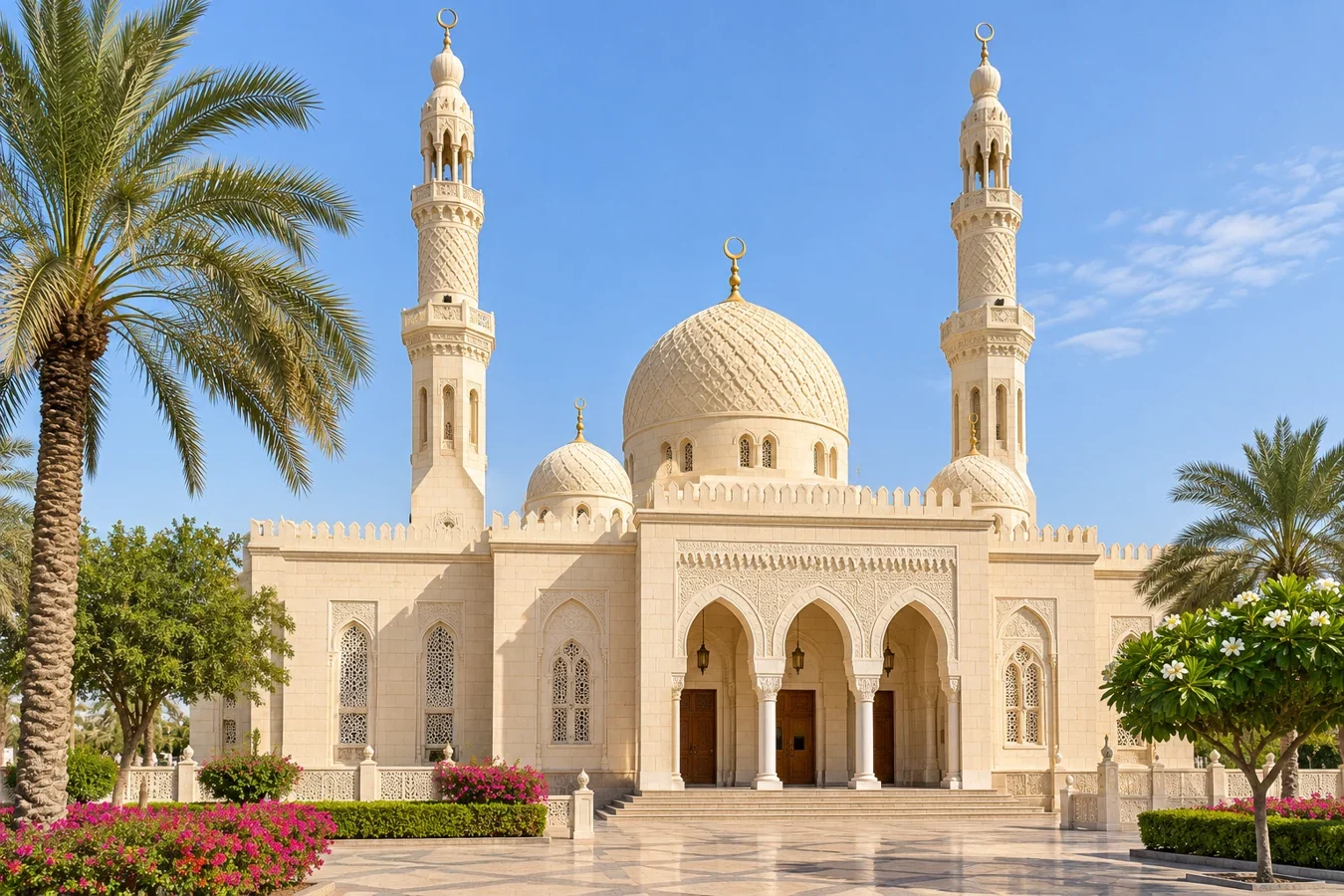
Look at the outside of the building while you wait for your group. Can you see a central dome? Can you spot the two minarets? A child may enjoy drawing these shapes later. Ask the presenter what a visitor should notice inside. A question about one visible detail gives the guide something concrete to explain.
Inside, listen before taking out your phone. You might hear a word that you want to remember. Write it down after the explanation, or ask the presenter to repeat it at a quiet moment. When the group is moving, keep up at an easy pace and let other people see. If you are unsure what an area is for, ask before going into it.
Visitors often arrive with different levels of knowledge. You can ask the presenter to explain a term in simpler words. If a friend asks a question you already know something about, listen to the answer before adding your own view. The presenter may explain what happens in this place or how a practice is understood by the host. Give that local explanation room.
Ask questions that invite a clear answer
Good first questions are small. How does a visitor know where to walk? What should we look at as we enter? What happens before the prayer starts? A simple question can lead to an answer you remember later. If you have a longer question, give the presenter one part at a time so there is a natural pause for the rest of the group.
A visitor might notice similar forms in more than one building and want to know what they mean. Ask about this mosque first. That helps the presenter speak about something you are both looking at. You can then ask whether the same detail appears in other places. Let the answer stand on its own without expecting one visit to cover all buildings or all communities.
A family can take turns picking one thing to ask. A child might choose a shape or a word. Someone else might ask about the order of a demonstration. If you are visiting with friends, save an extra question for the end when the presenter says it is a good time. At lunch, share the answers you heard and compare what each person noticed.
Take photographs with care
The public programme describes photography as part of a welcoming visit. Listen to staff for the instructions that apply where you are standing. The group may be able to take pictures at certain moments. Ask if you are unsure about flash, recording, special equipment or pictures of the demonstration. Keep the camera out of the way when someone is talking or moving nearby.
For an exterior photo, look for a safe spot where you can pause without blocking a walkway. You might frame the building between two trees or choose a wider view that includes the roof and both towers. Use the light you have. Taking one good picture from a quiet place is easier than walking backwards while you look at the screen. If a family member is taking the picture, tell them where to stand before they pick up the phone.
When other visitors are in a photo, think about whether the image needs them. You can often take a slightly different angle or wait until people move. Ask permission before taking a close picture of another person. A child can learn the same habit by asking before photographing someone they meet. It makes the outing more comfortable for everyone.
If you are sharing pictures after the visit, choose a caption that says what you actually saw. You could say that the picture shows the outside of Jumeirah Mosque before the public tour. If you are writing a note about something you learned, use a short description in your own words. If a name or meaning is uncertain, check it before you post.
Adjust the visit for your group
Children and first-time visitors
Explain the two or three things the child will do. They will arrive at the meeting point, listen to the guide and look around with an adult. Bring a small activity for waiting, such as a paper with two shapes to find. Keep the activity quiet so everyone can hear. If a child needs to move or take a break, ask where an adult can take them.
A tour can be easier after a good meal or a rest. Think about when the child normally gets hungry. Even if refreshments are included, check what is served if someone has an allergy or needs a particular meal. Plan where you can get food after the visit. Keep the meal location easy to reach so it does not become another long outing.
If you are taking more than one child, give each one a specific job. One can point out the entrance sign. Another can remember the family meeting place. Someone can choose a question for the guide. The jobs give them something to look for while leaving the adult in charge of directions and time.
Older guests and people with access needs
Ask the venue about the exact path the tour uses and where there is a chance to sit. Tell them what you need to know, such as whether the group uses steps, how far the drop-off is from registration or where a wheelchair can go. You can also ask whether there is a quiet place to wait. Details for one part of the venue may differ from details for the full visit.
A good route starts with the pace that works for your group. Leave enough time to find the meeting point without rushing. If a car is the easiest way to arrive, arrange the return leg before you leave home. Share the plan with everyone who will travel with you. That helps someone speak up early if they would like a shorter visit.
If the group wants to split up after the tour, agree on a second meeting point while everyone is together. One part of the family can have a meal or rest while another goes for a walk. You can borrow other ideas from this guide to Dubai with grandparents, especially for choosing between a short stop and a longer day out.
Put one easy activity after the tour
A Jumeirah meal or coastal pause
A meal near the mosque can give the group a chance to talk about what they learned. Pick a place that suits the whole group and check when it opens. If someone is tired, a seat and a drink may be enough to finish the outing. Keep a return option ready so you can leave when people are comfortable.
A coast stop can work if everyone still has energy. Look at the travel time from the mosque to the exact area you want to visit. Check how much walking that activity needs in addition to the trip there. For ideas, see the Jumeirah coast day guide. Choose a single part of that route if you have already spent the first part of your day on the mosque visit.
Save the Creek for a separate outing
You can pair several cultural stops across a Dubai trip. The mosque visit may give you a new question about the city’s history or how local places are used. Save time to explore that question on another day. An Old Dubai walk or the Al Shindagha Museum guide offers a different kind of outing by the Creek. A separate day gives the area its own time.
If your trip is short, choose according to what you most want to learn. The guided mosque visit has a set start. A walk along the Creek can often start when you are ready, though individual venues have opening hours. Make any fixed booking first and keep flexible parts of the day nearby. That makes it easier to handle traffic, breaks and changes in weather.
A short checklist to use before leaving
Check the public session and registration time on the official page. Confirm the current cost and whether you need to ask about a private group. Pick clothes and pack the scarf or layers you need. Save the exact location. Look at your route and decide how to get home. If you need access information, ask early enough to adjust your plan.
When you arrive, find the Majlis and follow the host’s directions. Keep one question in mind. Ask where photos are welcome if you are unsure. Leave time after the visit for an easy next step. You can finish with a favourite thing you saw or a new word you learned. A small detail is often the part of a visit you remember longest.
Before a later trip with friends, look at your own notes. Did you have enough time to register? Was the route comfortable? Was the meeting point easy to find? Those answers will help you plan a better return visit. Recheck the venue’s instructions every time because the session that worked once may be different on another day.
Plan for a group that arrives separately
If you are meeting friends at the mosque, send the exact location and session time the day before. Tell each person when the registration desk opens and where you will wait. Everyone can then plan from their own part of Dubai. A meeting time inside the check-in window works best when the group also knows what to do if one person is late.
Give the group a simple message to send on arrival. Something like “I am by the Majlis entrance” is enough. Avoid making someone wait alone at a spot far from the tour entrance. If a guest is delayed, they can call the venue or ask staff about another public session. Keep the rest of the group’s plans clear while you work out what is possible.
When paying for several guests, ask what forms of payment the venue accepts. Check whether each person should register in person. For a large group or a visit with specific needs, contact the organiser early. They can explain which programme fits your group. It is easier to settle those questions from home than to decide in a busy queue.
Check how a private tour differs
If you are organising a school, work or family group, look at the venue’s private visit information. Ask what the booking covers and which parts of the public programme are available to your group. Tell the organiser how many adults and children are coming and what time you can reach the Majlis. Ask about the final group size, payment and any changes you can make after booking. If the group will arrive in a coach, confirm where the driver may drop you off and wait. Share the dress guidance and check-in instructions when you send the plan so everyone has time to prepare.
Frequently asked questions
Can non-Muslims visit Jumeirah Mosque?
Yes. The venue’s guided public programme welcomes guests of different faiths. Check the current public visit instructions before you go.
Where do I register for the tour?
The official public programme directs visitors to the Majlis for registration. Follow the signs and confirm the walking route from your drop-off.
Do I need to book the public visit ahead?
The venue currently says advance booking is unnecessary for public visits. Check its current policy and contact the organiser for private group arrangements.
What time are the guided visits?
At the time of writing, the official page lists 10 am and 2 pm sessions from Saturday through Thursday. Registration is listed as opening 30 minutes before each session. Verify the details for your date.
How much is the public visit?
The venue currently lists AED 55 per person with light refreshments and Majlis activities. Check the current price and any child rates with the venue.
What should I wear?
Follow the venue’s modest dress guidance. Plan for loose clothes covering shoulders and legs, and bring a scarf for women as the venue requests.
Is photography allowed?
The public programme welcomes photography. Follow the presenter’s directions about when and where to take pictures, and ask about recording or special equipment.
Can I bring children?
A child can enjoy a guided visit with simple questions and a quiet waiting activity. Ask the venue about its current child policy and any needs specific to your family.
What should I ask about accessibility?
Ask about the route from drop-off, steps, seating, wheelchair access and any places to wait. Give the venue specific details about what your guest needs.
Can I combine the mosque with a Jumeirah coast stop?
Yes, if travel time, weather and the group’s pace make it practical. Put the guided visit first on the schedule and keep one coastal option flexible.